You may have seen this too. A child can name letters and recognize them on posters or in books, but when it comes to reading, they seem to get stuck. Parents begin to doubt, teachers try new worksheets, and children gradually lose the joy of discovery. Often, the real reason is never truly looked for....
Why Does a Child Know the Letters but Still Cannot Read? The Truth About Phonemic Awareness
22. April 2026by bpotocnak
You may have seen this too. A child can name letters and recognize them on posters or in books, but when it comes to reading, they seem to get stuck. Parents begin to doubt, teachers try new worksheets, and children gradually lose the joy of discovery.
Often, the real reason is never truly looked for.
Why children learn to read through sounds, not letter names
English is a sound-based language. When a child hears “m”, “a”, “s”, they can naturally blend these sounds into a word. But if they only know the names of the letters, they begin building a system in their mind that does not offer clear logic.
This is where phonemic awareness comes in — the ability to hear and distinguish individual sounds in words. Research shows that children who work with sounds before letters build stronger foundations for reading and text comprehension.
Why the traditional approach often leads to frustration
Many children are guided toward reading through workbooks and memorization. From an adult’s point of view, this may seem effective, but for a child it is often too abstract. They do not see the connection between what they hear and what they are supposed to read.
When reading becomes a series of tasks instead of a journey of discovery, motivation naturally declines.
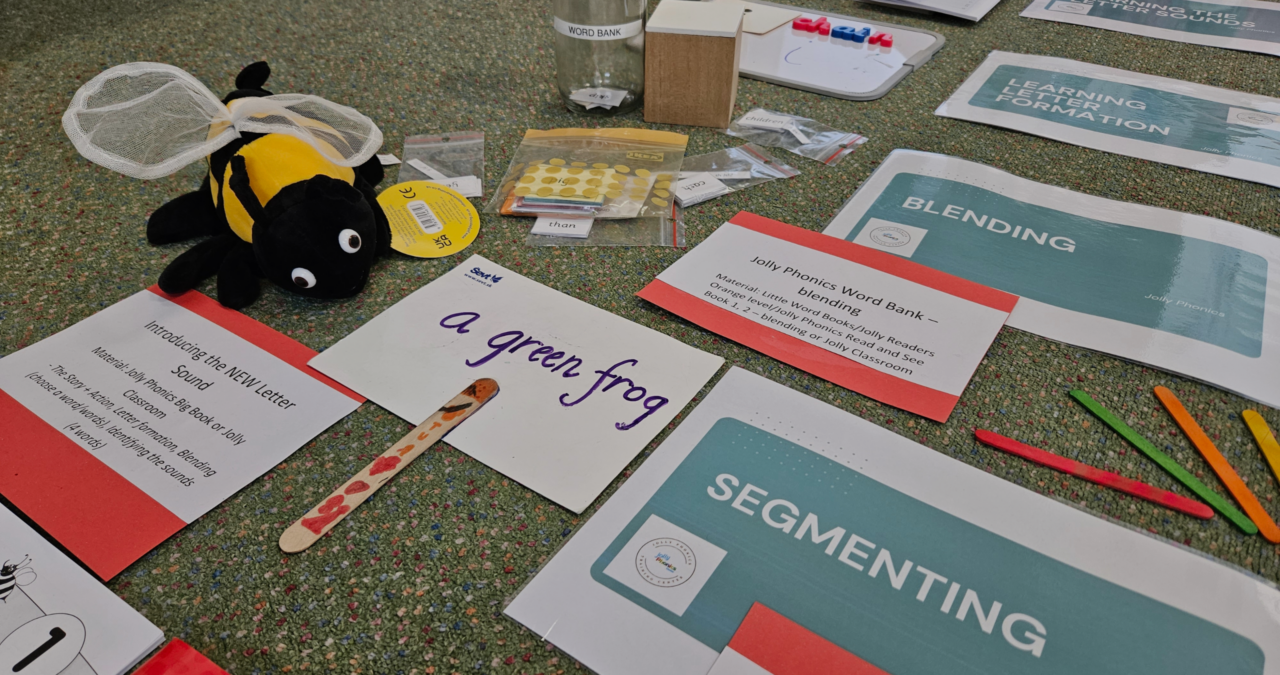
How Jolly Phonics works in practice
The Jolly Phonics method is built on a simple principle — children learn through movement, story, and experience. Every sound has its own gesture, rhythm, and context. This way, the child does not experience learning as an obligation, but as a game that makes sense.
Step by step, the child discovers that individual sounds can be blended together. Suddenly, these are no longer isolated letters, but words they can create on their own.
What you can do today
You may be surprised that getting started does not have to be difficult. It is enough to pay more attention to the sounds around you — identify the first sound in a word, play with sounds throughout the day, or listen to the rhythm of language together.
A child does not need perfect pronunciation or long sessions at the table. They need an adult who guides them with respect and curiosity.
Reading as discovery, not performance
If you feel your child is standing still, they may simply have missed an important step. When you return to working with sounds, reading can become a natural part of everyday life.
The Jolly Phonics method shows that the path to reading can be about the joy of discovery — a joy that stays with children long after they learn their first words.
